
Why the McDonald’s AI Ad Failed, and What It Reveals About Creative Standards
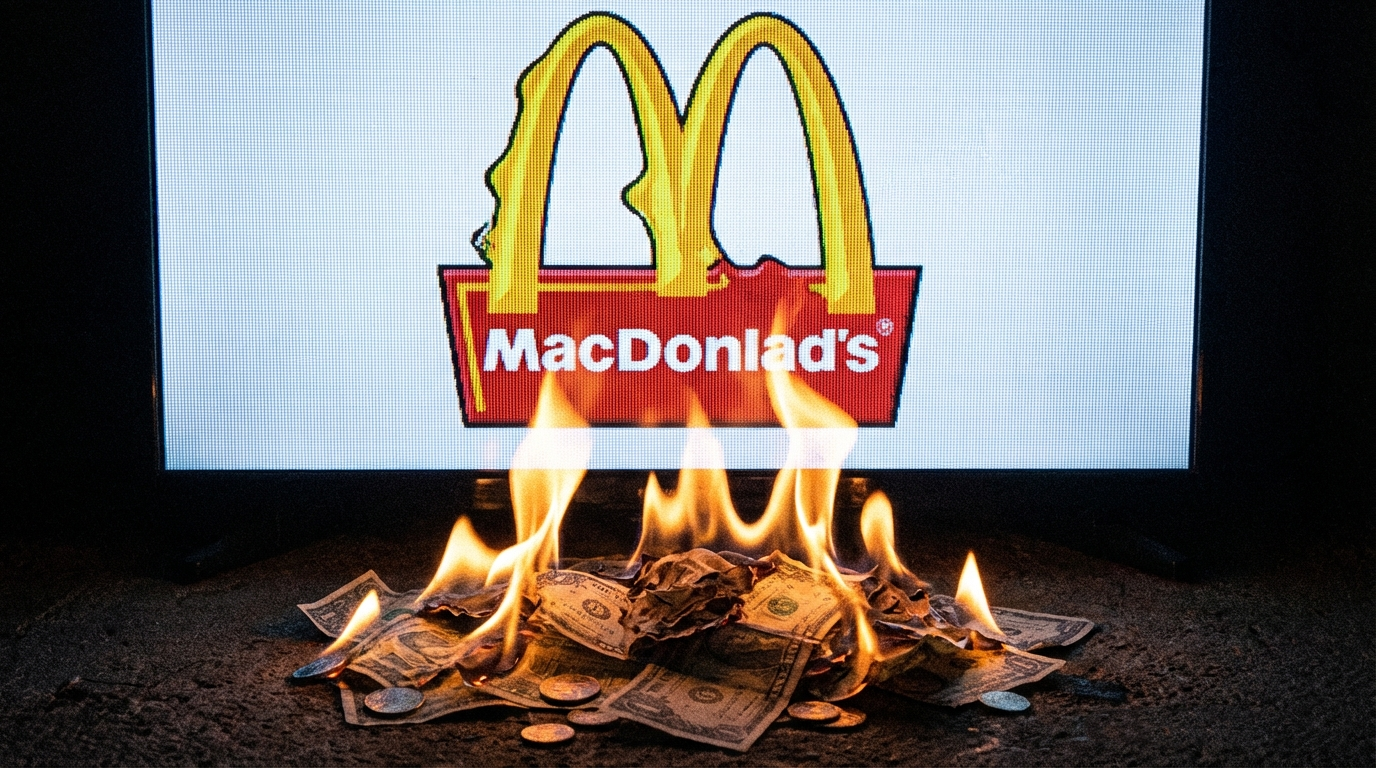
When McDonald’s released an AI-generated Christmas ad this month, the reaction was immediate and brutal. Viewers rejected it. Critics piled on. And within days, the company pulled the campaign entirely.
This happened despite a serious investment of time, money and talent. A top production company. A respected agency. Weeks of iteration. Endless refinement. All the things that normally lead to a reliable, polished commercial.
So why did it fall apart?
It is easy to blame the AI. Easy to say the technology is not ready. Easy to frame this as a cautionary tale about robots replacing artists.
But the truth is more interesting. The tool did not fail.
The creative judgment did.
The real issue: accepting the tool’s limitations as the new standard
AI did not think for anyone on this project. The team still made every decision. The failure happened because they accepted the limitations of the medium as if those limitations were suddenly acceptable.
Instead of asking the fundamental question every filmmaker must ask:
Does this stand up next to real filmmaking?
they asked:
Does this stand up within the limitations of AI?
That shift is the entire problem.
When you compare the finished ad to traditional filmmaking, it collapses instantly. Characters feel hollow. The images look assembled rather than directed. The emotional tone never settles. It carries the unmistakable feeling of something that has not lived in the real world.
Audiences felt that immediately. And they rejected it.
Effort is not craft. Complexity is not quality.
The Sweetshop’s CEO explained that the team spent weeks rebuilding shots, refining prompts, pushing models further and trying to coax emotional nuance out of the tool. I believe that completely.
But effort does not equal craft.
You can spend as much time as you want polishing the edges of a workflow, but if the medium cannot deliver emotional truth, the result will still feel hollow. Technology cannot manufacture the human instincts that give a scene weight, honesty and texture.
We are not at a stage where AI can replace those instincts.
And that is perfectly fine.
The problem arises only when we pretend it can.
The danger of grading creative work on a curve
There is a growing habit across the industry to give AI-generated work a pass because it is new. To grade it on a curve. To say things like:
“It is pretty good for AI.”
“It is amazing considering it is synthetic.”
“It is not perfect, but look how far the models have come.”
Here is the uncomfortable truth.
Audiences do not care.
They are not judging on novelty. They are not adjusting their expectations because a machine was involved. The only thing they care about is how the work feels.
And this particular piece did not feel good.
The lesson for filmmakers, creatives and brands
AI is a tool.
A powerful one.
One that should absolutely be in the modern creative toolkit.
But it is not the benchmark.
The benchmark is the same as it has always been.
Emotional truth.
Clarity of intention.
Rhythm, performance, honesty and soul.
If AI cannot reach that standard in a particular project, the answer is simple.
You do not lower the bar. You pick up the camera.
Tools can support craft.
Tools can accelerate workflow.
Tools can expand possibility.
But the standard must be set by people, not the technology they are experimenting with.
A closing thought
The McDonald’s ad is not evidence that AI harms creativity. It is evidence that creative teams can talk themselves into accepting results that do not meet the standard. The tool did not fail. The judgment did.
AI will shape the future of filmmaking and advertising. It will be part of the workflow, part of ideation, part of production. But none of that matters if the final piece does not hold up. Audiences do not care how it was made. They care how it feels.
And this is the part we cannot lose sight of.
If the work looks bad, it is bad.
If it feels hollow, it is hollow.
If it collapses next to real filmmaking, the audience will choose the better version every single time.
AI can support the craft.
But it cannot excuse the outcome.
That responsibility sits with us.