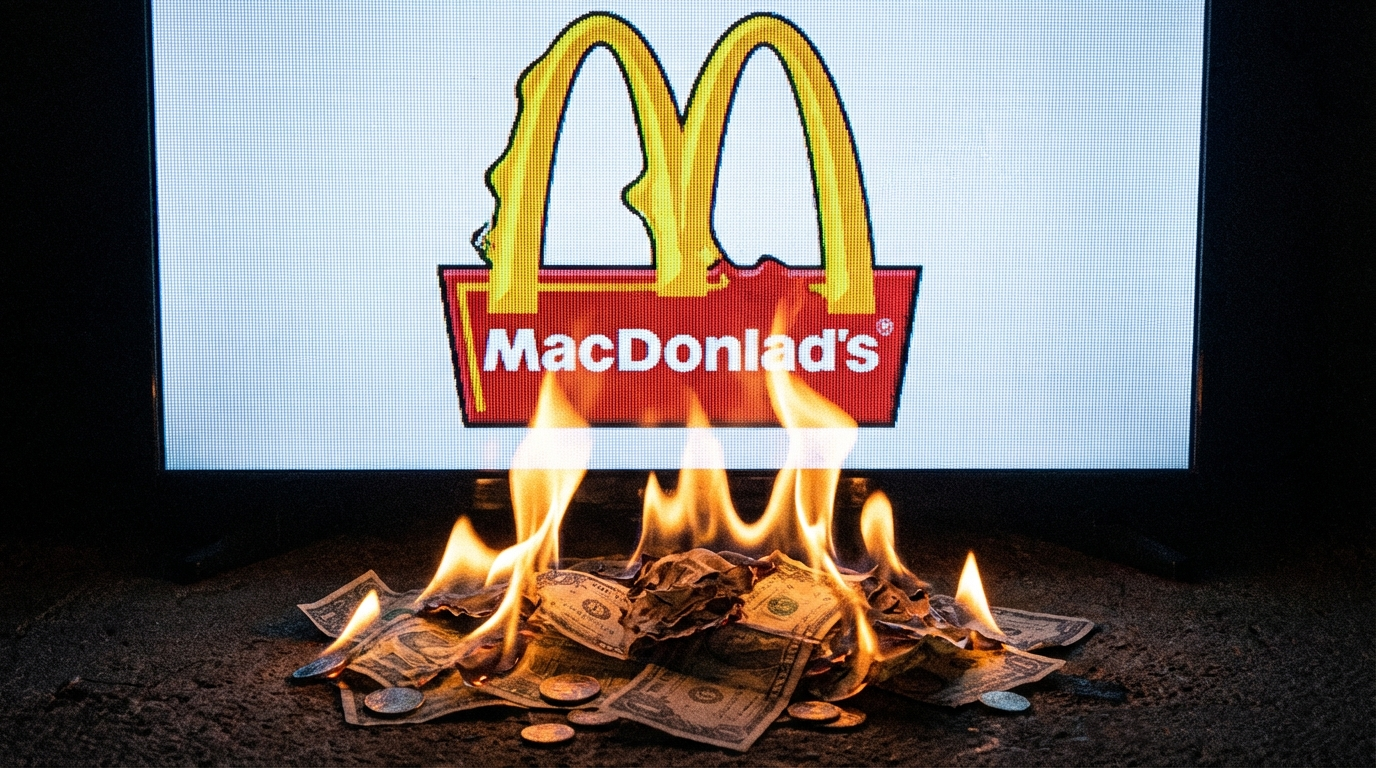
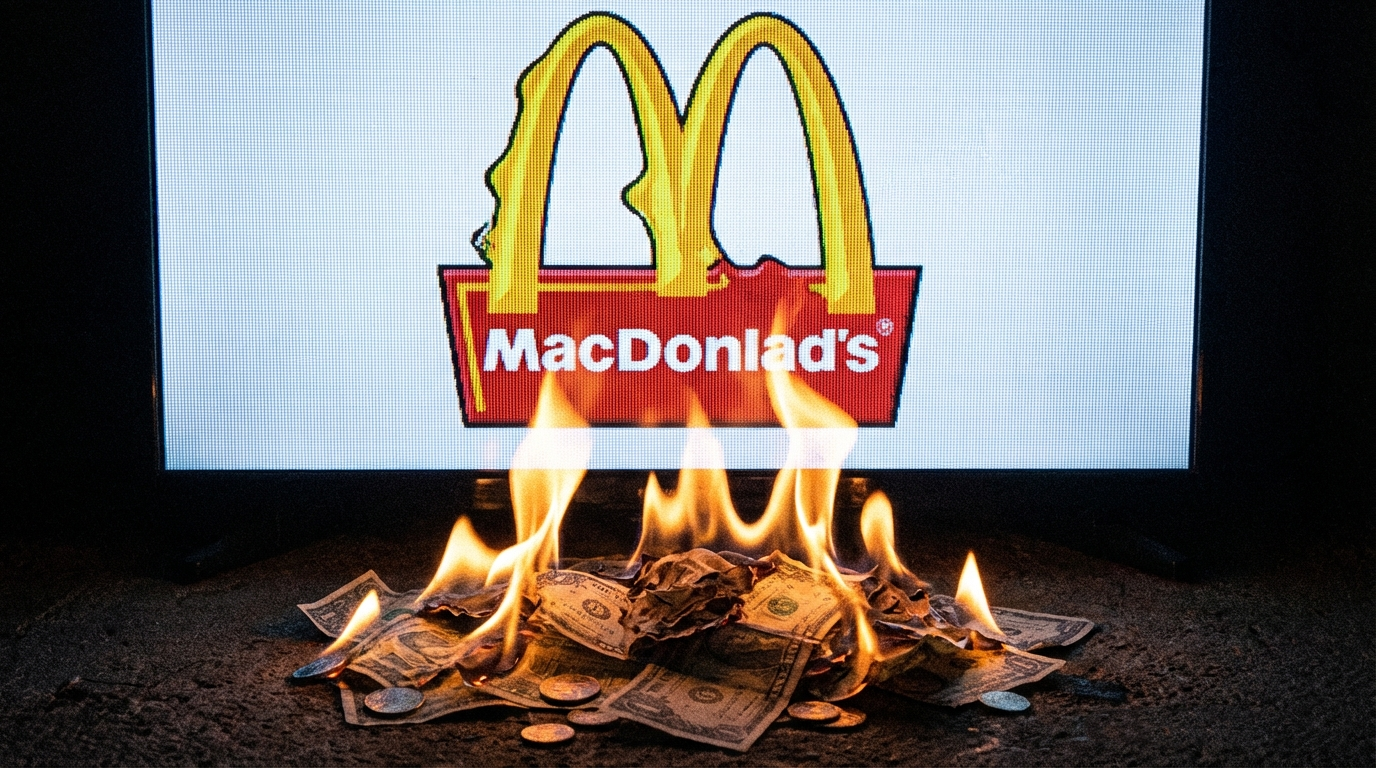
Why the McDonald’s AI Ad Failed, and What It Reveals About Creative Standards

When McDonald’s released an AI-generated Christmas ad this month, the reaction was immediate and brutal. Viewers rejected it. Critics piled on. And within days, the company pulled the campaign entirely.

This happened despite a serious investment of time, money and talent. A top production company. A respected agency. Weeks of iteration. Endless refinement. All the things that normally lead to a reliable, polished commercial.

So why did it fall apart?

It is easy to blame the AI. Easy to say the technology is not ready. Easy to frame this as a cautionary tale about robots replacing artists.

But the truth is more interesting. The tool did not fail.
The creative judgment did.

The real issue: accepting the tool’s limitations as the new standard

AI did not think for anyone on this project. The team still made every decision. The failure happened because they accepted the limitations of the medium as if those limitations were suddenly acceptable.

Instead of asking the fundamental question every filmmaker must ask:

Does this stand up next to real filmmaking?

they asked:

Does this stand up within the limitations of AI?

That shift is the entire problem.

When you compare the finished ad to traditional filmmaking, it collapses instantly. Characters feel hollow. The images look assembled rather than directed. The emotional tone never settles. It carries the unmistakable feeling of something that has not lived in the real world.

Audiences felt that immediately. And they rejected it.

Effort is not craft. Complexity is not quality.

The Sweetshop’s CEO explained that the team spent weeks rebuilding shots, refining prompts, pushing models further and trying to coax emotional nuance out of the tool. I believe that completely.

But effort does not equal craft.

You can spend as much time as you want polishing the edges of a workflow, but if the medium cannot deliver emotional truth, the result will still feel hollow. Technology cannot manufacture the human instincts that give a scene weight, honesty and texture.

We are not at a stage where AI can replace those instincts.
And that is perfectly fine.
The problem arises only when we pretend it can.

The danger of grading creative work on a curve

There is a growing habit across the industry to give AI-generated work a pass because it is new. To grade it on a curve. To say things like:

“It is pretty good for AI.”
“It is amazing considering it is synthetic.”
“It is not perfect, but look how far the models have come.”

Here is the uncomfortable truth.

Audiences do not care.

They are not judging on novelty. They are not adjusting their expectations because a machine was involved. The only thing they care about is how the work feels.

And this particular piece did not feel good.

The lesson for filmmakers, creatives and brands

AI is a tool.
A powerful one.
One that should absolutely be in the modern creative toolkit.

But it is not the benchmark.

The benchmark is the same as it has always been.

Emotional truth.
Clarity of intention.
Rhythm, performance, honesty and soul.

If AI cannot reach that standard in a particular project, the answer is simple.

You do not lower the bar. You pick up the camera.

Tools can support craft.
Tools can accelerate workflow.
Tools can expand possibility.

But the standard must be set by people, not the technology they are experimenting with.

A closing thought

The McDonald’s ad is not evidence that AI harms creativity. It is evidence that creative teams can talk themselves into accepting results that do not meet the standard. The tool did not fail. The judgment did.

AI will shape the future of filmmaking and advertising. It will be part of the workflow, part of ideation, part of production. But none of that matters if the final piece does not hold up. Audiences do not care how it was made. They care how it feels.

And this is the part we cannot lose sight of.

If the work looks bad, it is bad.
If it feels hollow, it is hollow.
If it collapses next to real filmmaking, the audience will choose the better version every single time.

AI can support the craft.
But it cannot excuse the outcome.

That responsibility sits with us.

Christian Fitzpatrick
Ideas. . . and why production without solid creative is probably costing you clients and money.

What is the value of an idea?

I mean, without execution, it’s a relatively useless little thing. . .however, put into practise, ideas have toppled empires, monopolies, governments, you name it. . .

They are at one time the most formless, yet potentially magnificent things one can experience or give life to. . .and they are the life blood of our business.

It is ideas that seperate our clients from the pack - it is ideas that put food in our bellies. . .They are our stock and trade.

Scarily, there is no sure fire way to come up with them, have more good ones than bad or know when the best one you’re going to get is staring you in the face and you should lock it in. Exact science, this is not. . .(Looking at that now, it seems crazy to build a business around it. But hey, so far it’s working. 😊)

It’s a labour of love, experimentation and more failure than success.

But make no mistake - it is the idea that matters more than anything else. All the fancy camera’s, pretty pictures and funky editing won’t polish a proverbial 💩to the point of being thought provoking. It won’t grab a person by the shirt front and adjust their entire perception of a complex situation with a digital slap to the face. It won’t make them feel something. It won’t make them shift.

This is part of the challenge these days when it comes to content creation - so much of it now is literally oozing out of the cracks of smartphones everywhere, dripping in flashy editing and effects, but it’s failing in the most important department. It has no idea. It communicates nothing. You could literally swap out the brand at the end and it would seem as relevant with any other.

If we’re not delivering experiences to our audiences, not creating content that also communicates powerful ideas - then all we’re really doing is contributing to the noise. In my opinion, there’s enough of that crap out there already. . .

If you’re not going to bring something powerful, interesting and engaging to my screen - please get off it.

The most valuable gift somebody can give to you is their time - it must be respected. So if somebody chooses to spend it with your creative or watching your content, give them something to remember. Inspire them. Move them. Share a powerful idea. . .and make it worthwhile.

- Christian


“I've learned that people will forget what you said, people will forget what you did, but people will never forget how you made them feel.”

- Maya Angelou

Christian Fitzpatrick
My story. . .

Everybody has a story. . .a reason for being where they are in the world and a reason for doing what they do. And to be honest, sometimes sharing that story is hard. . .this is mine. From a very personal perspective.

People might wonder why I would share this or question it’s necessity within the scope of my business. But I think in reality, when we strip all the bullshit away, people deal with people - In my case, they deal with Christian, the person - and my clients become friends. These are not cold, professionally curt relationships bogged down in the mire of keeping up manicured Linkedin facades - these are actual friendships where we get to be ourselves. Real and unfiltered.

Now whilst there’s a time and place for professional disposition at the beginning of any relationship when you’re getting to know somebody, I unapologetically enjoy being myself around people and will bring it to base level as quickly as possible. I think that’s helped me immensely as a Director.

So about this video? Well, I can say that it’s only been in the last 6 months that I’ve actually worked through some of the buried grief around my Mum’s passing all that time ago that I could actually even look to retelling this story of how it was that I came to pick up a camera. That took some deep work and the result is something I’m proud of. . .being able to share this in such a way is something I didn’t think I would ever see happen.

As well as being an insight into what it is that shaped me as a filmmaker, I think it also goes a way to explaining why the pieces I bring to life have such an emotional side. My craft was literally born during a deep and rather intense emotional arc in my life and that has always played a part in what I search for when I’m coming up with creative, writing, shooting or editing. . .

This is not something really designed to market my business or win me clients. . .perhaps it’s actually a way of winning less business! Hahah! Weeding out the would be clients that just aren’t the right fit. . .who knows?

Regardless - this is my story, told properly - for the first time.

Take from it what you will. x


Christian Fitzpatrick
Video Marketing, authenticity and finding your truth.

These days, I don’t think people really care too much for advertising. Millennials in particular, they think your old advertising sucks because it fails to connect. Nobody wants to feel sold or pitched. And to avoid that, there’s not as much to it as you think.

Honesty and authenticity. Scary words for some. . .and quite often not necessarily associated with marketing! :) Ha! But now, more than ever, connecting with people in such a way that they actually feel your message is critically important.

Millennials are an interesting breed. And by 2020, they’ll be spending 2 out of every 3 dollars earnt in Australia. Where they spend those dollars is largely going to be determined by who is best connecting with them in the digital space - because interestingly, they’re certainly not at all interested in traditional media and they won’t deal with brands that they don’t feel some kind of affinity to or some kind of connection with.

And I can understand that because as much as I hate to admit it, I fall into the category. *Cue music - “Hi, my name is Christian….and…. I’m a millennial”.* And you know what? We’re an emotional bunch. We want brands to care, be considerate, conscious, respectful, add value and bring something more to our life than literally just the products or services it delivers. We want to feel like what we bring to the world brings value and in turn, we want the brands we support to mirror that sentiment and have purpose.

It’s not hard. . .stop thinking like a brand, and start caring like a person. It’s talking to people and connecting, rather than pushing and promoting.

As a business owner or a brand, you need to find your truth - do a little deep work, sit and meditate on it, whatever floats your boat. But seriously think upon what it is that you do. . .and why you continue to do it. Where do you find joy in what you do? What keeps you coming back?

There’s nothing more inspiring than finding your truth and as I found out in the piece below. . .few things more affirming than actually sharing it.

For me, personally, it’s helping clients on their journey of discovery that really drives me. . .as well as the personal challenge of creating beautiful imagery to accompany the stories uncovered. I enjoy the process of hearing the stories first hand - the way lives were shaped, businesses built and dreams realised. It requires full emotional investment and a great deal of empathy, which can be challenging when the subject matter is confronting - but the juice is worth the squeeze as it’s that deep connection that often shapes the outcome.

The moving image and the power of storytelling is undoubtedly the strongest way to truly connect with people, of any generation. . . My suggestion, be brave, do the work and share it openly - You never know, you might just find you enjoy it!

- Christian

About the Author - Christian Fitzpatrick is a Creative, Commercial Director and award-winning cinematographer - writing, directing and shooting for clients who want a unique integrated experience, nation wide. He and his wife Katie founded the creative agency Mac and Bern Creative on the Sunshine Coast in 2016 after running production companies for 15 years. They live there with their two children, who along with the business, keep them incredibly busy.

Christian Fitzpatrick